Best Rock Hammers for Fossil Hunting
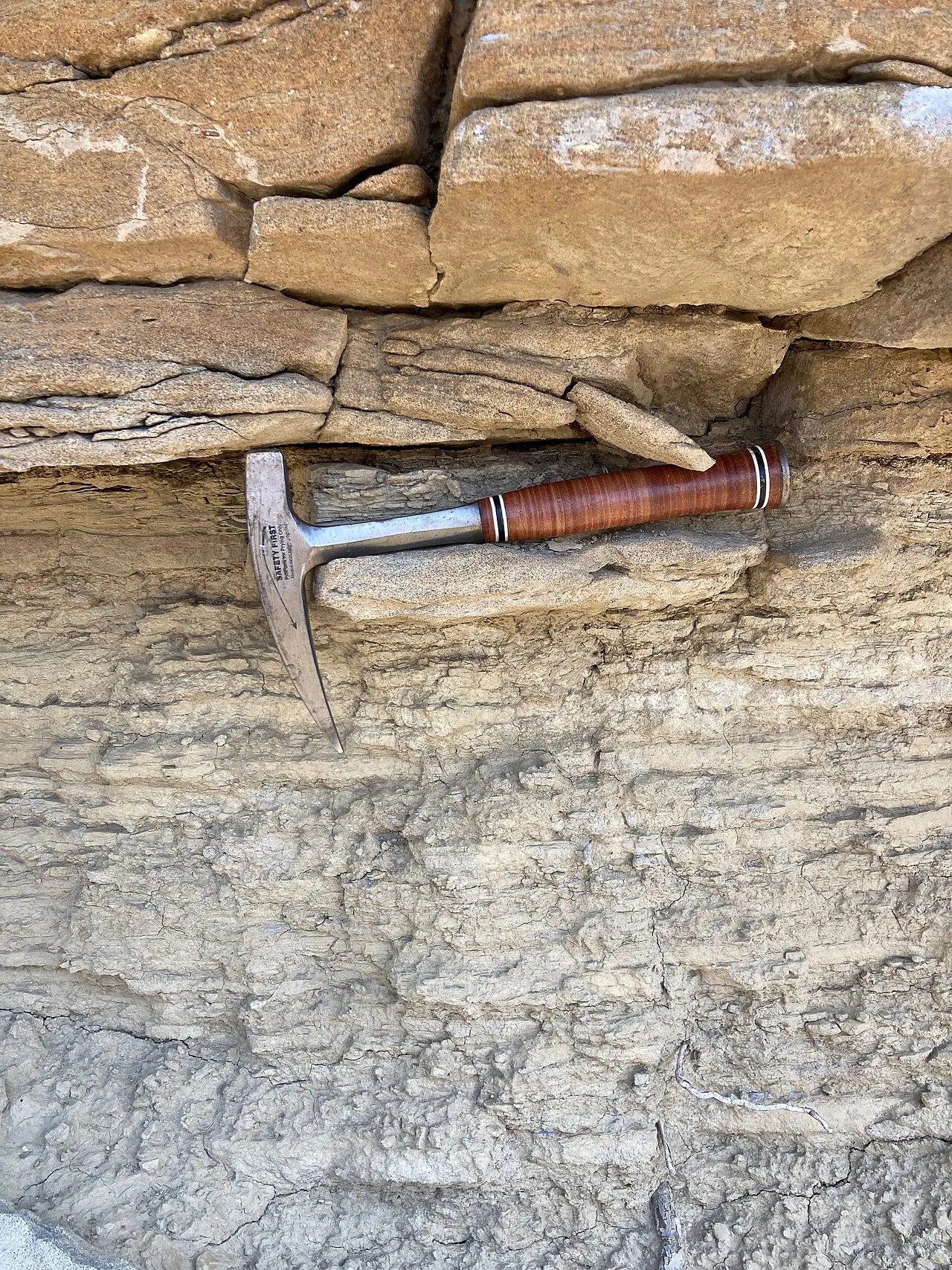
A rock hammer is the single most important tool in fossil collecting. It’s what you’ll use to split rock, pry specimens, and break through overburden. A good one lasts decades. A bad one is dangerous.
What to Look For
Material
Forged steel, one piece. This is non-negotiable. Cast steel or welded-head hammers can shatter, sending metal fragments at your face. One-piece forged construction (like all Estwing models) eliminates this risk entirely.
Head Style
There are three main head styles for fossil collecting:
- Pointed tip (rock pick) — The most versatile. The point lets you pry, probe, and split. This is the default recommendation for most collectors.
- Chisel edge (rock hammer) — A flat striking face on one end and a chisel blade on the other. Excellent for splitting shale along bedding planes.
- Flat/flat (crack hammer) — A flat face on both ends. More specialized — used mainly with chisels for controlled splitting.
Weight
- 14-16 oz — Light, good for long hikes. Less splitting power.
- 20-22 oz — The sweet spot for most fossil collecting.
- 28 oz+ — Heavy duty. More power but tiring over long sessions.
Handle
- Nylon vinyl grip (Estwing standard) — Excellent shock absorption, durable, all-weather
- Leather grip — Beautiful but absorbs water. Best for dry conditions.
- Wood handle — Avoid for rock hammering. Wood handles can break and are less safe.
Do I Really Need an Estwing?
Yes. This isn’t brand loyalty — it’s physics. Estwing’s one-piece forged steel construction is genuinely the safest and most durable design for striking rock. There are cheaper hammers, but they’re either cast (shatter risk), welded (head can fly off), or simply less well-balanced.
At $35-45, an Estwing rock pick is the best value in fossil collecting. You’ll use it for decades.
Complementary Tools
A rock hammer alone is often enough, but these additions make you more effective:
- Cold chisels (set of 3-4 sizes) — For controlled splitting. Place the chisel, tap with the hammer. Much more precise than the hammer alone.
- Pry bar or wonderbar — For levering larger rock slabs
- Bricklayer’s chisel — Wide blade for splitting broad shale layers
- Trim chisel — Narrow blade for detail work around specimens
Safety
Always wear safety glasses when using a rock hammer. This is the most important rule in fossil collecting. Rock chips fly unpredictably, and eye injuries are the most common preventable accident in the hobby.
- Never strike two hammer faces together
- Never use a hammer with a chipped or mushroomed face
- Keep bystanders at a safe distance
- Wear gloves for extended hammering sessions
Our Top Picks
Estwing E3-22P Pointed Tip Rock Pick
$35-40
Pros
- + One-piece forged steel — indestructible
- + Pointed tip excellent for prying and splitting
- + Shock-reducing nylon vinyl grip
- + Industry standard for 60+ years
Cons
- - Heavier than some alternatives (22 oz)
- - Point can be too aggressive for delicate specimens
The default recommendation for good reason. If you buy one hammer, make it this one.
Estwing E3-23LP Long Handle Rock Pick
$40-45
Pros
- + Longer handle gives more leverage
- + Same bulletproof construction as E3-22P
- + Better for standing work on outcrops
Cons
- - Less portable than the shorter model
- - Heavier (28 oz)
Better than the E3-22P for extended fieldwork on outcrops. The extra handle length reduces back strain.
Estwing E3-22BLC Flat Face Rock Hammer
$35-40
Pros
- + Flat face plus chisel edge — two tools in one
- + Great for splitting shale along bedding planes
- + Same quality construction
Cons
- - No pointed tip for prying
- - Less versatile than the rock pick
Excellent choice if you primarily collect from shale formations. Pair with the E3-22P for full coverage.
ESTWING Special Edition Rock Pick (E30SE)
$45-55
Pros
- + Leather-wrapped handle is gorgeous
- + Same one-piece steel construction
- + Excellent balance
Cons
- - Leather grip absorbs water
- - More expensive for the same function
The premium version for collectors who want their tools to look as good as they work.