Shark Tooth Hunting Guide
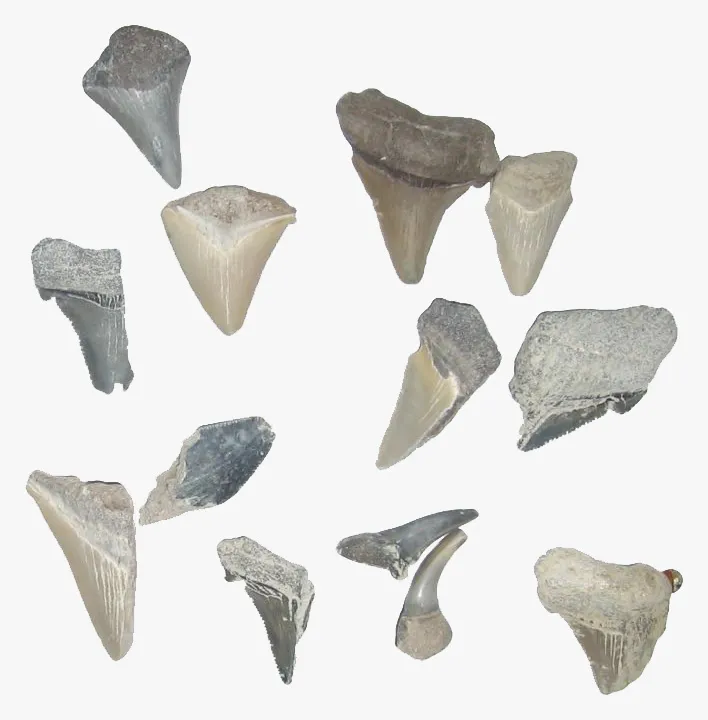
Shark teeth are the most commonly found and most exciting fossils for new collectors. They’re abundant, easy to identify, and found in rivers and beaches across the eastern US.
Why Shark Teeth Are So Common
Sharks have been around for over 400 million years, and unlike bony fish, they continuously shed and replace their teeth throughout their lives. A single shark can produce tens of thousands of teeth in its lifetime. Multiply that by hundreds of millions of years and hundreds of species, and you get a staggering number of teeth preserved in the fossil record.
Shark teeth are also made of dense, durable materials (dentine and enamel) that fossilize exceptionally well. While shark skeletons are cartilage and rarely preserve, their teeth survive for millions of years.
Best Places to Find Shark Teeth
Beaches
- Venice Beach, Florida — The “Shark Tooth Capital of the World.” Shallow water sifting with a sand scoop yields teeth daily.
- Caspersen Beach, Florida — Just south of Venice, less crowded, similar finds.
- Topsail Island, North Carolina — Storm-washed Miocene and Pliocene teeth on the beach.
- Calvert Cliffs, Maryland — Eroding Miocene cliffs drop teeth onto the beach below.
- Edisto Beach, South Carolina — Excellent after storms.
Rivers and Creeks
- Peace River, Florida — Wade and sieve for megalodon teeth, mako teeth, and more.
- Cooper River, South Carolina — Diving and wading for large Miocene and Oligocene teeth.
- Big Brook, New Jersey — Cretaceous shark teeth from creek gravel.
- Aurora, North Carolina — The PCS Phosphate mine area has produced countless teeth.
How to Identify Shark Teeth
Key Features
- Root — The broad base that attached the tooth to the jaw. Helps narrow down species.
- Crown — The pointed blade of the tooth. Shape varies enormously between species.
- Serrations — Some species have serrated edges (like a steak knife), others are smooth.
- Bourlette — A chevron-shaped band between root and crown. Present in some species.
- Nutrient groove — A channel on the root where blood vessels ran. Present in some species.
Common Species You’ll Find
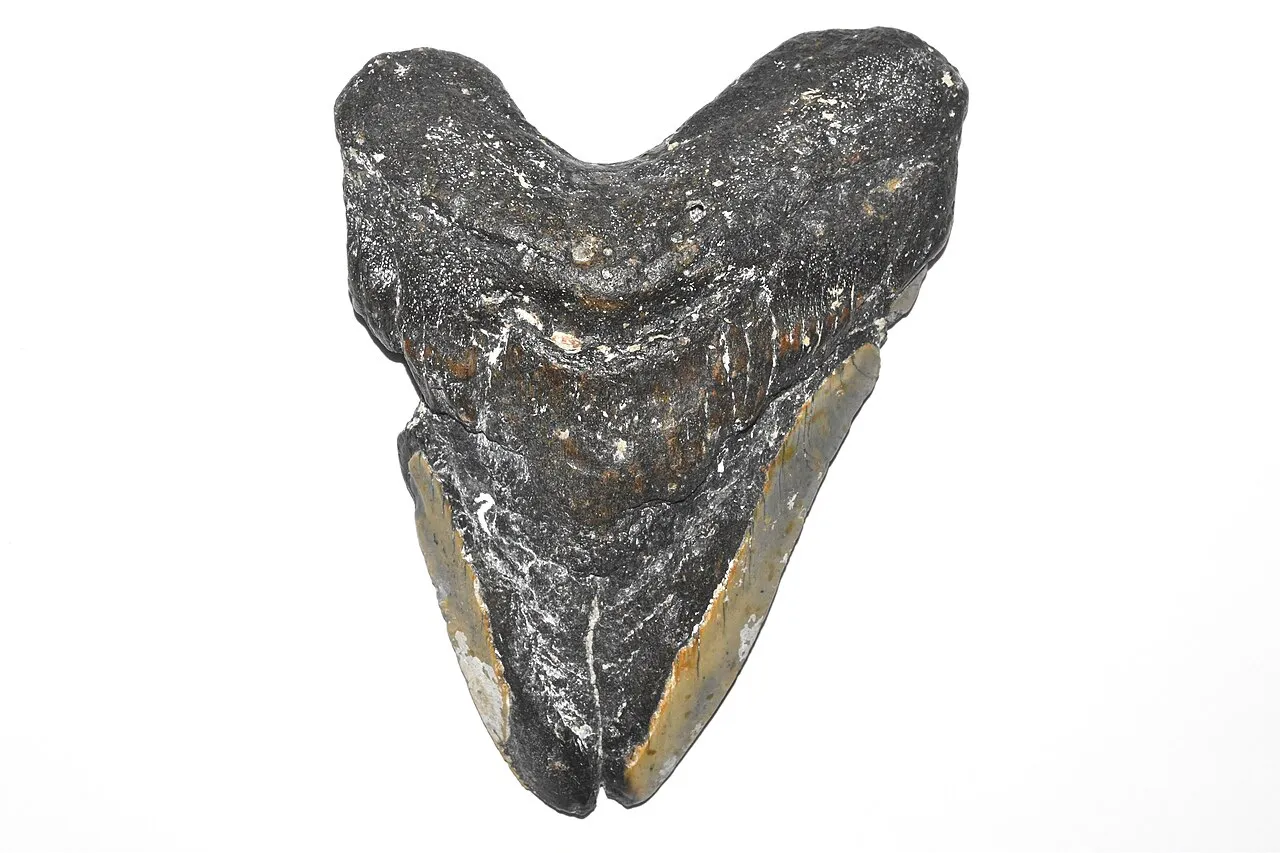
Megalodon (Otodus megalodon)
- Massive teeth, 3-7+ inches for adults
- Triangular with fine serrations
- Thick root with a visible V-shaped neck
- Age: Miocene-Pliocene (23-3.6 million years ago)
- Found: FL, SC, NC, MD, NJ
Mako (Isurus species)
- Slender, needle-like teeth with smooth edges
- 1-3 inches typical
- No serrations
- Found in the same locations as megalodon teeth
Great White (Carcharodon carcharias)
- Triangular with serrated edges
- Broader than mako teeth
- 1-2.5 inches typical for fossils
- Often confused with small megalodon teeth
Bull Shark (Carcharhinus leucas)
- Thick, triangular
- Coarse serrations
- Usually under 1 inch
- Very common find
Sand Tiger (Carcharias taurus)
- Long, curved, narrow teeth with small side cusps
- Smooth edges
- Distinctive and easy to identify
Gear for Shark Tooth Hunting
Beach Collecting
- Sand flea rake / Venice beach scoop — The essential tool. Scoops and sifts shallow water.
- Mesh sieve — For finer sifting of shell hash
- Polarized sunglasses — See through glare into shallow water
River Collecting
- Classifier screen / sieve — Scoop river gravel, shake to separate
- Water shoes or waders — You’ll be in the water
- Digging tool or trowel — For gravel bars
Tips for Success
- Hunt at low tide — More beach exposed, fossils concentrated at the water line
- Go after storms — Wave action churns up new material
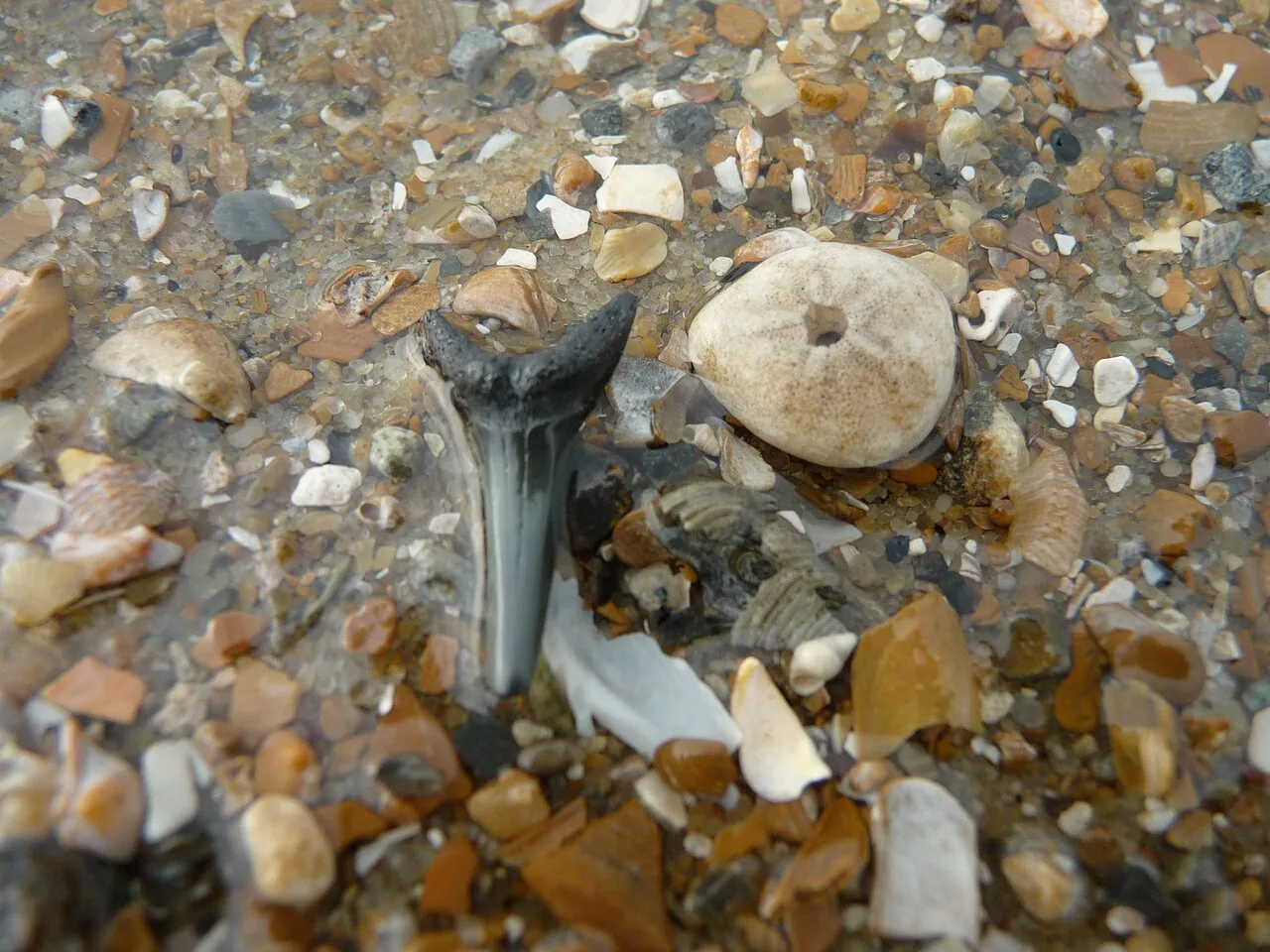
- Look in shell hash — Teeth accumulate with similar-sized shell fragments
- Learn the “black triangle” shape — Fossilized teeth are often black or dark brown and triangular. Train your eye to spot that shape and color.
- Check the waterline — Teeth wash up with each wave and settle at the highest reach of the water
- Be patient — Even at the best sites, you may search for 30 minutes before your first find. Once you “get your eye,” they start appearing everywhere.
Reference Photos