Fossil Hunting in Kansas
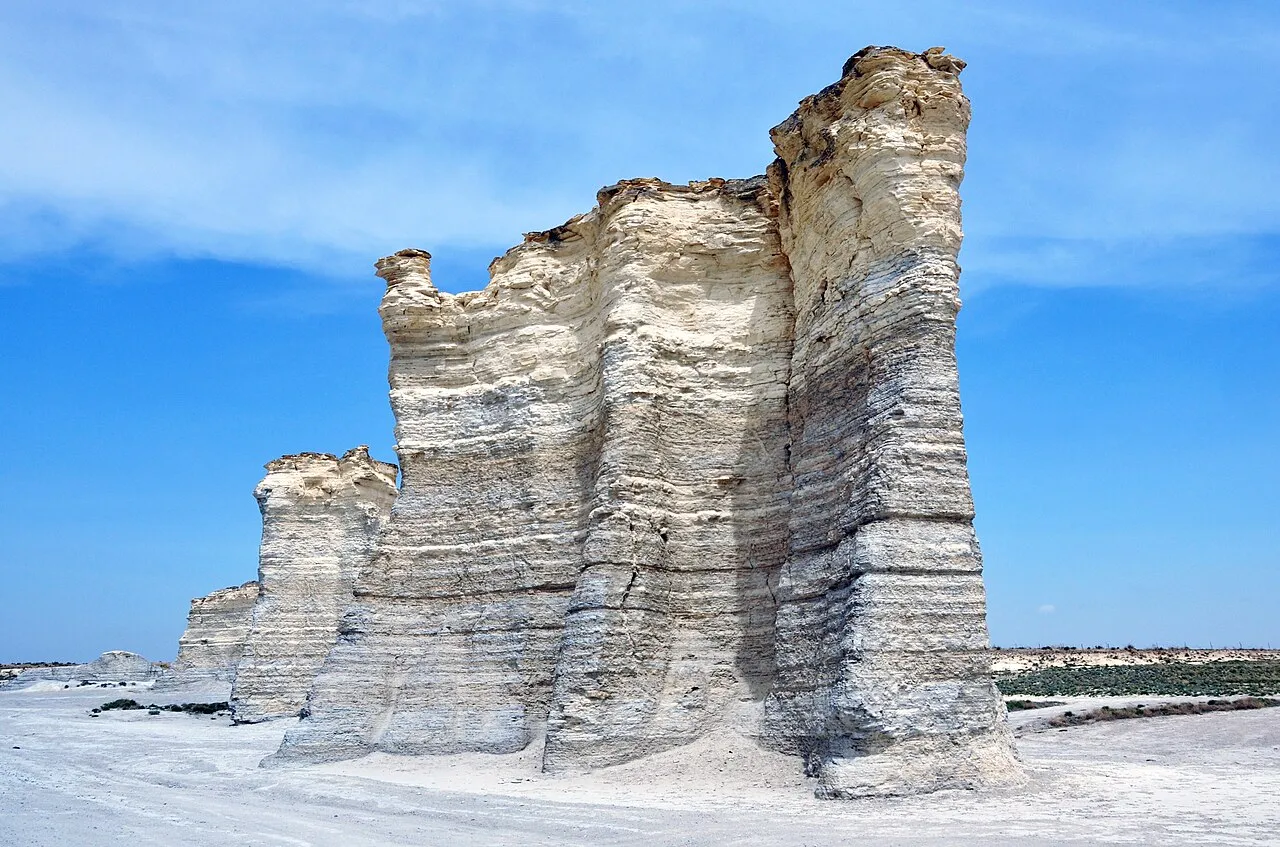
Kansas holds one of the most remarkable paleontological stories on Earth. During the Late Cretaceous, a vast shallow sea called the Western Interior Seaway split North America in half, and what is now western Kansas lay beneath its warm, tropical waters. The fossils left behind are extraordinary.
Why Kansas?
The Western Interior Seaway was home to apex predators that rival anything in today’s oceans. Mosasaurs over 40 feet long, giant fish like Xiphactinus (which could swallow prey whole), pteranodons with 20-foot wingspans, and enormous sharks patrolled these waters roughly 80-85 million years ago. The Niobrara Chalk — a soft, white limestone formed from microscopic algae — preserves these animals in stunning detail.
Kansas has produced some of the most famous fossil specimens in natural history museums worldwide. The Sternberg Museum in Hays houses a world-class collection, and new finds still emerge from the chalk every year. While the most spectacular vertebrate finds require expertise and permits, casual collectors can find shark teeth, fish bones, and marine shells along road cuts and chalk exposures across western Kansas.
The Greenhorn Limestone, slightly older than the Niobrara, adds another productive collecting horizon. Farther east, Pennsylvanian and Permian rocks yield marine invertebrates, and the Ogallala Formation in the northwest preserves Miocene mammal remains.
What You’ll Find
Niobrara Chalk (~85 million years old):
- Shark teeth — Multiple species including Squalicorax and Cretoxyrhina (the “Ginsu Shark”)
- Fish vertebrae and scales — From bony fish like Xiphactinus and Enchodus
- Inoceramus shells — Giant clam-like bivalves, extremely common
- Oyster shells — Often encrusting other fossils
- Ammonites — Coiled cephalopod shells
Greenhorn Limestone (~95 million years old):
- Inoceramus — Abundant large bivalves
- Fish scales and teeth — Various species
- Ammonites — Several genera
Rarer finds (typically requiring permits for vertebrates):
- Mosasaur bones and teeth
- Plesiosaur vertebrae
- Pteranodon fragments
- Complete fish skeletons
Best Time to Visit
- Spring (April-May): Winter freeze-thaw exposes fresh chalk surfaces; wildflowers dot the prairies
- Early fall (September-October): Cooler temperatures make western Kansas field work comfortable
- After rain: Erosion washes out new specimens from chalk bluffs and road cuts
- Avoid midsummer: Western Kansas regularly exceeds 100 degrees Fahrenheit with little shade
Tips for Kansas Collecting
- Bring plenty of water and sunscreen — western Kansas is open prairie with minimal shade and services are far apart
- Start with road cuts — county roads through Gove, Logan, and Trego counties cut through Niobrara Chalk; scan the loose rubble at the base
- Learn to spot Inoceramus — these large, iridescent shell fragments are your signpost that you are in productive chalk
- Leave vertebrate fossils in place — if you find a bone or tooth from a large animal, photograph it, mark the GPS coordinates, and report it to the Sternberg Museum
- Visit the Sternberg Museum first — seeing the exhibits helps train your eye for what to look for in the field
- Carry a GPS or good maps — cell service is unreliable in remote areas of western Kansas
- Respect private land — most chalk exposures are on ranch land, and landowners are often friendly if you ask first
Collecting Sites
Monument Rocks Area
Private (Permission Needed)Gove County
The iconic chalk pillars of Monument Rocks (a National Natural Landmark) sit on private land owned by the Frisbie family, who allow visits. Collecting from the formations themselves is not permitted, but loose surface material in the surrounding area can yield shark teeth and shell fragments. Always respect posted boundaries.
Castle Rock
Private (Permission Needed)Gove County
Another dramatic chalk spire south of Quinter. Like Monument Rocks, it sits on private ranch land. The badlands around Castle Rock contain weathered-out Cretaceous marine fossils. Contact the landowner for permission before visiting.
Fick Fossil and History Museum Area
Free Public AccessOakley, Logan County
The museum itself houses an outstanding collection of Niobrara Chalk fossils. Nearby road cuts and chalk exposures along US-40 and local county roads in Logan and Gove counties produce shark teeth and marine shell fragments from loose surface material.
Kanopolis Lake Area
Free Public AccessEllsworth County
The reservoir area exposes multiple formations including the Dakota Sandstone with plant impressions and Cretaceous marine beds. Mushroom Rock State Park nearby features interesting concretions. Collecting loose surface material is permitted in the state park area.
Legal Rules for Kansas
Kansas allows casual surface collecting of invertebrate fossils on public land. Vertebrate fossils (fish, mosasaurs, plesiosaurs, pteranodons) require a permit from the Kansas Geological Survey if found on state land. Much of western Kansas is private ranch land — always get landowner permission. Do not collect from or damage the formations at Monument Rocks or Castle Rock. National Natural Landmarks have additional protections.
Read our full legal guide for federal laws and more details.
Key Geological Formations
- Niobrara Chalk (Upper Cretaceous)
- Greenhorn Limestone (Upper Cretaceous)
- Kiowa Shale (Lower Cretaceous)
- Ogallala Formation (Miocene)
Local Fossil Clubs & Museums
- Kansas Geological Society
- Sternberg Museum of Natural History
- Kansas City Gem and Mineral Club
- University of Kansas Biodiversity Institute