Fossil Hunting in Maryland
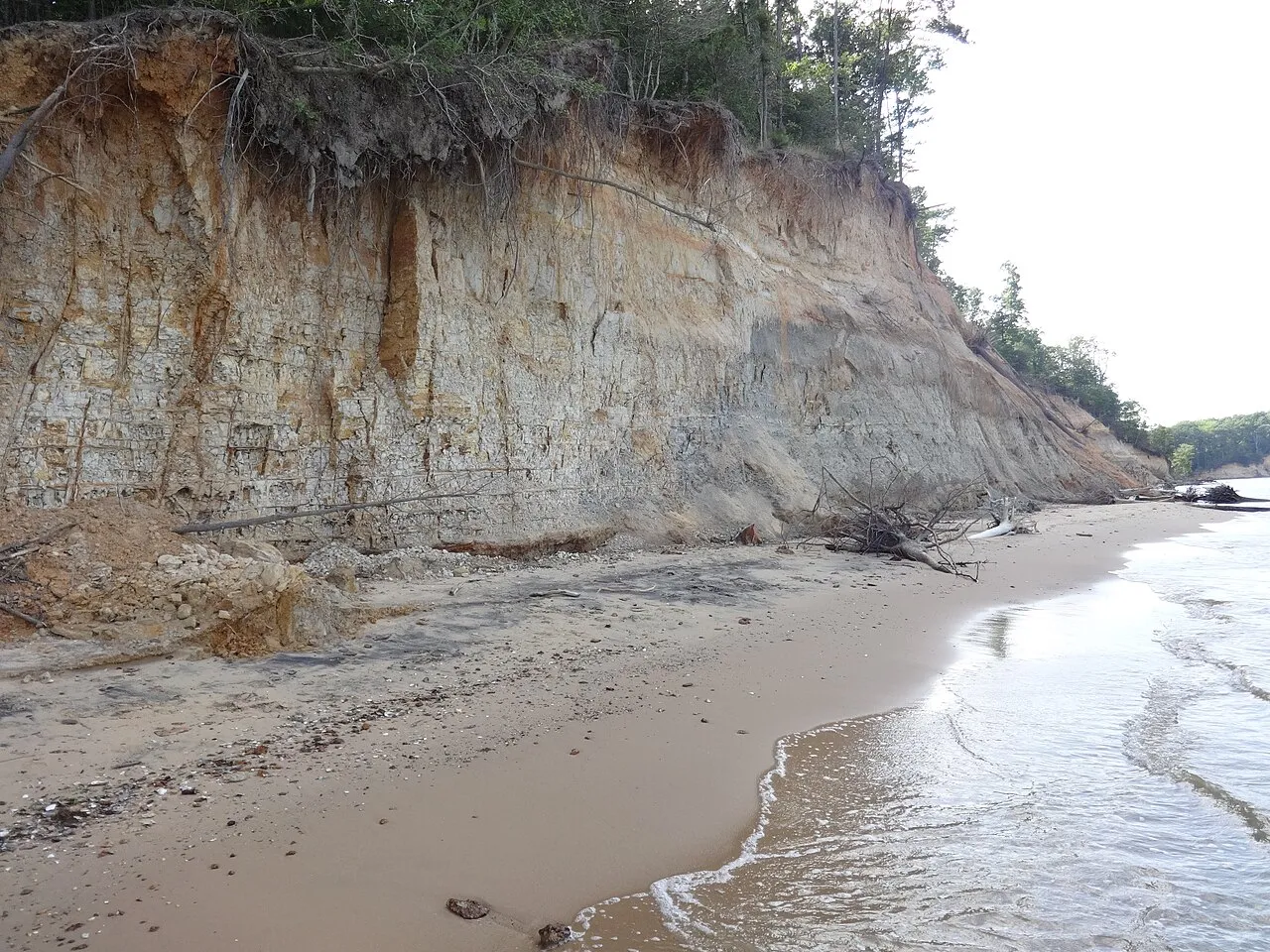
Maryland’s Calvert Cliffs are one of the most famous fossil collecting destinations on the East Coast. These towering Miocene-age cliffs stretch for more than 30 miles along the western shore of the Chesapeake Bay, continuously eroding and releasing millions of fossil shark teeth, whale bones, and marine shells onto the beaches below.
Why Maryland?
Between roughly 20 and 8 million years ago (the Miocene epoch), the area that is now Maryland’s western Chesapeake shore was submerged beneath a warm, shallow sea teeming with sharks, whales, dolphins, sea turtles, and countless invertebrates. As these animals died, their remains settled into the seafloor sediment.
Today, these sediments form the Calvert Cliffs — up to 100 feet of exposed fossiliferous rock stretching from Chesapeake Beach in the north to Drum Point in the south. Wave action from the Chesapeake Bay constantly undercuts and erodes the cliffs, washing fossils onto the beach below. This means the supply is essentially endless — new fossils appear with every tide and storm.
The three main formations exposed in the cliffs are, from oldest to youngest:
- Calvert Formation (~20-15 million years ago): The thickest and most fossiliferous unit, rich in shark teeth, whale bones, and shells.
- Choptank Formation (~15-12 million years ago): Contains excellent scallops, echinoids, and shark teeth.
- St. Marys Formation (~12-8 million years ago): The youngest unit, exposed at the top of the cliffs.
What You’ll Find
Shark teeth (the main attraction):
- Megalodon (Otodus megalodon) — The giant shark’s teeth are the holy grail of Calvert Cliffs collecting. Complete specimens over 4 inches are rare but do turn up. Fragments and smaller teeth are more common.
- Mako sharks (Isurus species) — Beautiful, slender teeth with smooth cutting edges. Very common.
- Snaggletooth shark (Hemipristis serra) — Distinctive curved teeth with serrated edges. Common and easy to identify.
- Great white ancestor (Carcharodon hastalis) — Large, broad teeth without serrations.
- Bull shark (Carcharhinus species) — Small, triangular teeth. Extremely common.
- Sand tiger shark (Carcharias taurus) — Slender teeth with side cusps. Very common.
- Cow shark (Hexanchus and Notorhynchus) — Distinctive comb-shaped lower teeth.
- Requiem sharks — Various small species, the most abundant teeth on the beach.
Marine mammal fossils:
- Whale vertebrae, ribs, and ear bones (tympanic bullae)
- Dolphin teeth and bone
- Seal bones (rare)
Other vertebrate fossils:
- Crocodilian teeth and scutes
- Sea turtle shell fragments
- Ray dental plates (eagle rays, cow-nosed rays)
- Fish vertebrae and teeth
Invertebrate fossils:
- Ecphora (Ecphora gardnerae) — Maryland’s state fossil, a beautifully ribbed snail shell. Found occasionally and always a prize.
- Scallops (Chesapecten) — Large, handsome bivalves common in the Choptank Formation.
- Turritella snails — Elongated spiral shells, very common.
- Barnacles, coral, and bryozoans
Best Time to Visit
- Low tide: Essential. Check tide charts before visiting — the beach is much wider at low tide, exposing more fossil-bearing gravel.
- After storms: Nor’easters and hurricanes accelerate cliff erosion and deposit fresh material on the beach. The days immediately after a major storm can be spectacular.
- Late fall through early spring: Fewer crowds and winter storms move more material. Flag Ponds has limited off-season hours, so check before visiting.
- Summer: The most popular season. Flag Ponds is open daily but the parking lot fills quickly on weekends — arrive early.
- Avoid extreme high tide: At high tide, there may be very little beach to walk at Calvert Cliffs State Park.
Tips for Maryland Collecting
- Check the tide chart. This cannot be overstated. Arriving at high tide means you may have no beach to collect on. Plan to arrive 1-2 hours before low tide for maximum collecting time.
- Walk the waterline. Fossils concentrate in the gravel and shell hash along the tide line. Look for dark, shiny objects (shark teeth) among the lighter-colored shells. Train your eye on the triangular shape.
- Bring a small sieve or screen. Scooping up handfuls of gravel and sifting through it is an efficient way to find smaller teeth.
- The trail at Calvert Cliffs State Park is 1.8 miles each way. It is flat and easy, but plan for a 4+ hour round trip including collecting time. Bring water, snacks, and sunscreen.
- Flag Ponds is easier access but has limited hours and a parking fee (typically around $6 for county residents, $10 for non-residents). It fills up fast on summer weekends.
- Stay off the cliffs. The cliff face is inherently unstable. People have been killed by cliff collapses. Collect only from the beach. This is both a safety and legal issue.
- Bring a container with padding. Small shark teeth are easily lost. A pill bottle or small jar with cotton works well. Larger teeth and whale bones can go in a bag.
- Visit the Calvert Marine Museum in Solomons, MD. Their fossil collection is outstanding and their paleontology department actively studies Calvert Cliffs material. They have a fossil identification service and occasionally lead guided collecting trips.
- Try the Potomac River sites for variety. If you want something different from Miocene shark teeth, Purse State Park on the Potomac exposes older Cretaceous and Paleocene rocks with a different suite of fossils.
Collecting Sites
Calvert Cliffs State Park
Free Public AccessLusby, Calvert County
A 1.8-mile trail leads to the beach at the base of the Calvert Cliffs. Fossils erode from the cliffs and wash onto the beach — collect from the beach only, NOT from the cliff face (it is illegal and dangerous). Look through the gravel and shell hash at the waterline. Best at low tide.
Flag Ponds Nature Park
Public (Fee)Lusby, Calvert County
A Calvert County park with a beach at the base of the Calvert Cliffs. The short trail to the beach is easier than Calvert Cliffs State Park. There is a small entrance fee and the park has seasonal hours (typically open weekends in spring/fall, daily in summer). Fossil collecting from the beach is permitted.
Bayfront Park (Chesapeake Beach)
Free Public AccessChesapeake Beach, Calvert County
A small public beach at the northern end of the Calvert Cliffs exposure. Less dramatic cliffs than the southern sites, but easier access and still productive for shark teeth. Walk the beach at low tide and check gravel deposits.
Brownie's Beach
Free Public AccessBayfront, Calvert County
A well-known informal collecting spot along the Calvert Cliffs shoreline. Access can be muddy. The beach here produces excellent shark teeth from the Calvert and Choptank formations. Sometimes called Scientists Cliffs beach.
Purse State Park
Free Public AccessMarbury, Charles County
Located along the Potomac River, Purse State Park exposes Cretaceous and Paleocene formations that are different from the Miocene Calvert Cliffs. Look for Paleocene shark teeth, petrified wood, and iron-rich fossils along the river beach. Less visited than the Calvert Cliffs sites.
Legal Rules for Maryland
Collecting fossils from the beach below the Calvert Cliffs is legal at public parks and beaches — you may keep what you find on the beach surface. DO NOT dig into or climb the cliff faces. It is both illegal and extremely dangerous (the cliffs are unstable and fatal collapses have occurred). Maryland state parks allow surface collecting of fossils unless specifically posted otherwise. The Calvert Marine Museum encourages collectors to report unusual finds. Vertebrate fossil collecting on state lands does not require a special permit for personal, non-commercial collecting. The Calvert Cliffs are designated a National Natural Landmark.
Read our full legal guide for federal laws and more details.
Key Geological Formations
- Calvert Formation (Miocene)
- Choptank Formation (Miocene)
- St. Marys Formation (Miocene)
- Aquia Formation (Paleocene)
- Arundel Clay (Early Cretaceous)
Local Fossil Clubs & Museums
- Calvert Marine Museum
- The Geological Society of America (Southeastern Section)
- Southern Maryland Rock and Mineral Club
- Chesapeake Gem and Mineral Society
- Maryland Geological Survey