Fossil Hunting in Michigan
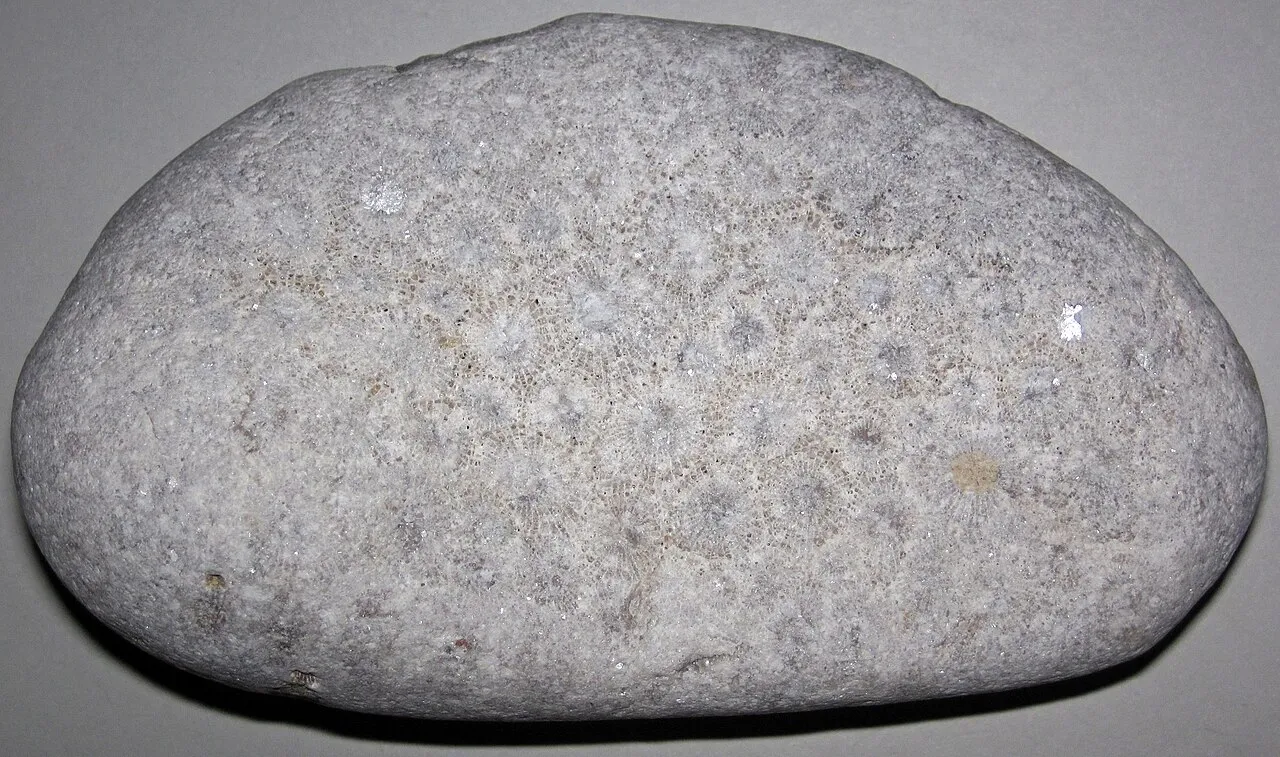
Michigan is the Petoskey stone state. These beautifully patterned Devonian coral fossils are found on beaches across the northern Lower Peninsula and have become one of the most recognized fossils in American collecting culture.
Why Michigan?
During the Devonian period, roughly 350 million years ago, Michigan was covered by warm, shallow tropical seas filled with coral reefs. The Michigan Basin — a bowl-shaped geological structure underlying the state — preserves thick sequences of Devonian limestone and shale. Glacial action during the Ice Age broke up these formations and scattered coral fossils across the northern landscape, depositing them on the beaches of Lake Michigan and Lake Huron.
What You’ll Find
Devonian corals (~350-380 million years old):
- Petoskey stones (Hexagonaria percarinata) — the star of Michigan collecting, a colonial rugose coral with a distinctive hexagonal pattern visible when wet or polished
- Favosites (honeycomb coral) — tabulate corals with small, tightly packed tubes
- Horn corals (Rugosa) — solitary cone-shaped corals, often well-preserved
- Chain corals (Halysites) — Silurian corals occasionally found as glacial erratics
Other marine fossils:
- Brachiopods and crinoid stems from Devonian limestones
- Bryozoans and gastropods
Best Time to Visit
- Spring (April-June): Ice breakup and spring storms churn up fresh material on beaches
- After storms: Wave action is the primary mechanism that delivers new fossils to the beach
- Early morning: Get to popular beaches before other collectors
Tips for Michigan Collecting
- Wet the stones — Petoskey stone patterns are nearly invisible when dry but pop when wet; carry a spray bottle
- Walk slowly and scan — Petoskey stones blend in with other gray beach cobbles until you train your eye
- Check gravel bars — fossils concentrate where waves sort stones by size and density
- Visit Rockport for in-place Devonian exposures rather than just beach-tumbled specimens
- Try polishing — Petoskey stones take a beautiful polish with wet sandpaper or a rock tumbler
Collecting Sites
Petoskey State Park
Public (Fee)Petoskey, Emmet County
The namesake location for Michigan's state stone. Petoskey stones (the colonial coral Hexagonaria percarinata) are found along the Lake Michigan shoreline. Wet the stones to reveal the distinctive honeycomb coral pattern.
Magnus Park Beach
Free Public AccessPetoskey, Emmet County
A public beach on Little Traverse Bay that produces Petoskey stones and other Devonian fossils. Less crowded than the state park and equally productive.
Rockport State Recreation Area
Public (Fee)Alpena, Alpena County
The Devonian limestone exposures at Rockport yield a variety of corals, brachiopods, and crinoid fossils. The old quarry walls and shoreline are both productive. Part of the Thunder Bay National Marine Sanctuary area.
Leelanau Peninsula Beaches
Free Public AccessLeelanau County
Beaches along the Leelanau Peninsula yield glacially transported Devonian coral fossils. Any Lake Michigan beach in the northern Lower Peninsula is worth checking.
Legal Rules for Michigan
Petoskey stone collecting is a beloved Michigan tradition and is legal on public beaches and state park shorelines. Michigan state parks allow collection of reasonable quantities of rocks and fossils from the beach for personal use. Do not use tools to excavate in state parks. On private property, always get permission. The Petoskey stone is Michigan's state stone.
Read our full legal guide for federal laws and more details.
Key Geological Formations
- Traverse Group (Devonian)
- Dundee Limestone (Devonian)
- Bayport Limestone (Mississippian)
- Coldwater Shale (Mississippian)
Local Fossil Clubs & Museums
- Michigan Mineralogical Society
- Petoskey Stone Seekers
- University of Michigan Museum of Natural History