Fossil Hunting in South Dakota
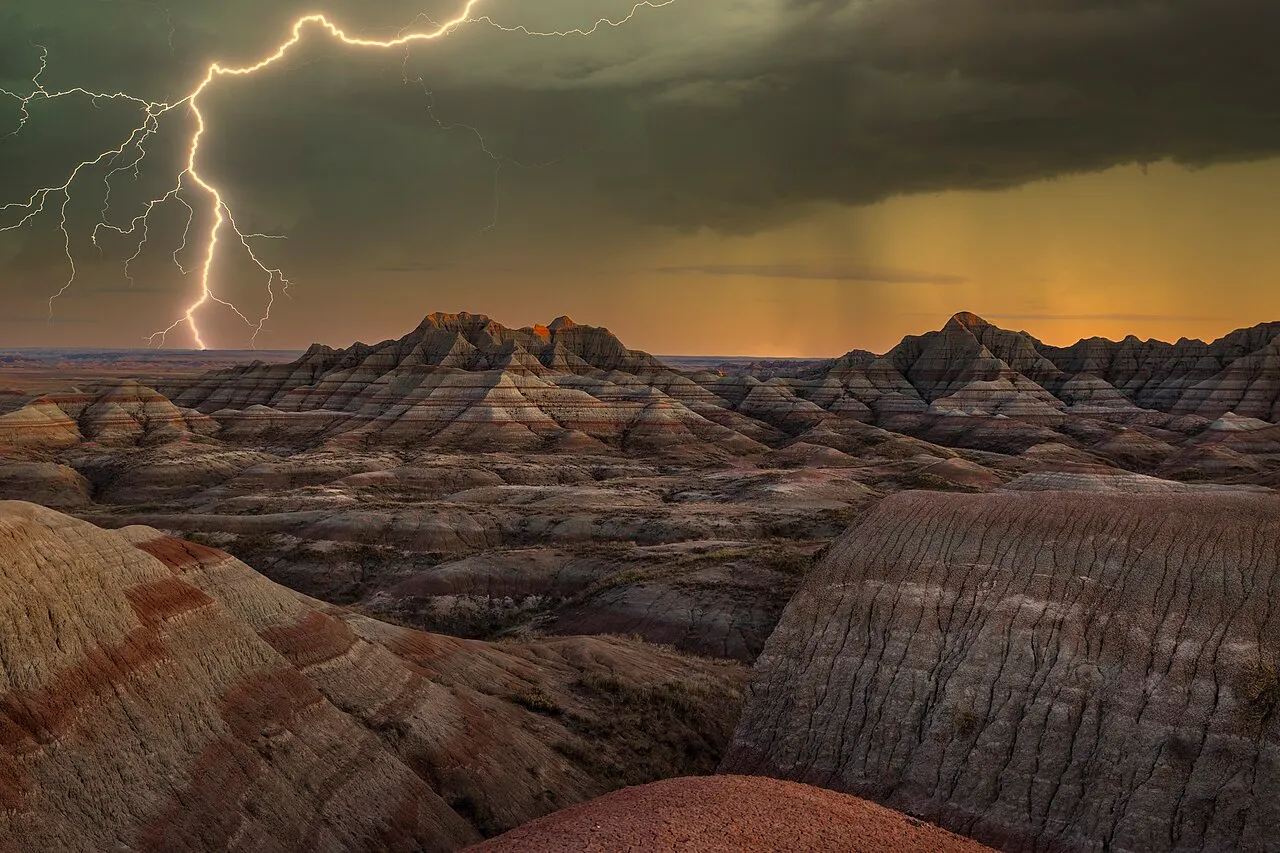
South Dakota is one of America’s great fossil states, anchored by the world-famous Badlands — a landscape that has produced tens of thousands of ancient mammal fossils over more than a century of collecting. Add in Hell Creek Formation dinosaur beds in the northwest and Cretaceous marine fossils across the central part of the state, and South Dakota offers remarkable fossil diversity.
Why South Dakota?
South Dakota’s fossil wealth comes from three distinct geological windows:
The White River Badlands (Eocene-Oligocene, ~37-28 million years ago): After the dinosaurs went extinct, mammals diversified and filled the ecological void. The White River Group sediments — colorful bands of mudstone, siltstone, and volcanic ash — record this dramatic chapter in mammalian evolution. Ancient rivers, floodplains, and grasslands supported a menagerie of animals unlike anything alive today: pig-like oreodonts, massive titanotheres, nimble three-toed horses, saber-toothed predators, and giant land turtles.
The Western Interior Seaway (Late Cretaceous, ~85-66 million years ago): During the Late Cretaceous, a vast inland sea split North America in two. The Pierre Shale and Niobrara Formation record this marine environment, preserving ammonites, baculites, mosasaurs, plesiosaurs, giant fish, and sea turtles.
Hell Creek Formation (Latest Cretaceous, ~68-66 million years ago): In the northwestern corner of the state, the same formation that produces T. rex in Montana extends into Harding and Perkins counties. This is where the most famous T. rex of all — “Sue,” now at the Field Museum in Chicago — was discovered in 1990.
What You’ll Find
White River Group mammals (Eocene-Oligocene):
- Oreodonts (Merycoidodon and Miniochoerus) — The most common large fossil in the Badlands. These sheep-sized herbivores lived in enormous herds. Complete skulls are found regularly on private land.
- Titanotheres (Megacerops) — Massive rhino-like animals with forked horns. Bone fragments are common; complete skulls are extraordinary finds.
- Three-toed horses (Mesohippus and Miohippus) — Small, dog-sized horses. Jaw fragments and teeth are relatively common.
- Nimravids (Hoplophoneus and Dinictis) — Saber-toothed predators that looked like cats but were a distinct family. Rare but iconic finds.
- Turtles — Large land tortoise shells are common in the White River Group.
- Rabbits and rodents — Small mammal jaws and teeth are abundant.
- Archaeotherium — A large, aggressive entelodont (“hell pig”). Skull and jaw fragments are prized finds.
Cretaceous marine fossils:
- Baculites — Straight-shelled ammonites, extremely common in Pierre Shale. Often found as partial or complete shells with beautiful iridescent nacre (ammolite-like).
- Ammonites (Placenticeras and Hoploscaphites) — Coiled ammonites, some with preserved mother-of-pearl.
- Mosasaur bones and teeth — Marine reptile remains from the Western Interior Seaway.
- Fish — Enchodus (“saber-toothed herring”) teeth, vertebrae.
- Shark teeth — Cretaceous species including Squalicorax and Cretoxyrhina.
Hell Creek Formation dinosaurs:
- Triceratops, Edmontosaurus, T. rex (teeth and bone fragments), Pachycephalosaurus, turtles, crocodilians — the same fauna as Montana’s Hell Creek.
Best Time to Visit
- Summer (June-August): The primary season for organized dig programs and the best weather for badlands fieldwork. Badlands National Park is most accessible and all facilities are open.
- Early fall (September-October): Cooler temperatures, fewer crowds, and the dramatic light in the Badlands is spectacular. Many commercial dig operators are still running.
- After heavy rains: Erosion in the Badlands is rapid. Thunderstorms can expose new fossils overnight — experienced local collectors check productive exposures after rainstorms.
- Avoid winter and early spring: Temperatures are extreme and many commercial operations are closed. Road conditions in the badlands can be treacherous.
Tips for South Dakota Collecting
- Do NOT collect in Badlands National Park. This is federal land administered by the National Park Service. Removing any natural objects, including fossils, is a federal offense with serious fines. Enjoy the park for education and then collect on nearby private land.
- Be aware of tribal lands. Large portions of the area surrounding Badlands National Park are on the Pine Ridge Indian Reservation. Collecting on tribal land without explicit permission from the tribal government is illegal. The South Unit of Badlands National Park is co-managed with the Oglala Sioux Tribe.
- Book a commercial dig. Several operations near Scenic and Interior offer guided fossil digs on private ranch land where you can find and keep White River Group fossils. This is the most practical and legal way to collect Badlands-area fossils.
- Visit the museums. The Museum of Geology at the South Dakota School of Mines in Rapid City has a world-class collection of Badlands fossils. The Mammoth Site in Hot Springs preserves an in-situ Columbian mammoth bone bed. The Black Hills Institute in Hill City is one of the world’s most important commercial paleontology operations and has a remarkable showroom.
- Pierre Shale baculites are accessible. If you want to collect without a commercial operation, look for Pierre Shale road cuts and exposures along the Missouri River in central South Dakota. Iridescent baculites are beautiful and legal to collect from non-park, non-tribal land.
- Bring sun protection and water. The badlands are hot, exposed, and dry in summer. There is no shade. Dehydration and heat exhaustion are real risks.
- Watch for loose footing. Badlands terrain is steep, crumbly, and can be slippery when wet. Wear sturdy boots with good ankle support.
Collecting Sites
Badlands National Park (No Collecting)
Public (Fee)Interior, Jackson & Pennington Counties
Badlands National Park is one of the richest fossil deposits in the world, with White River Group sediments full of Eocene and Oligocene mammal fossils. Collecting is STRICTLY PROHIBITED. However, fossils are visible eroding from the formations throughout the park, and the Ben Reifel Visitor Center has an excellent fossil exhibit. A must-visit for context before collecting on nearby private land.
Private Ranch Digs (Badlands Area)
Commercial Dig SiteNear Interior & Scenic, Shannon & Jackson Counties
Several private ranches surrounding Badlands National Park offer commercial fossil digging experiences. The White River Group formations extend well beyond park boundaries onto private land where collecting is legal with the landowner's permission. Operators like the Fossil Station near Scenic offer guided digs where you can find and keep oreodont skulls, turtle shells, and other Oligocene mammal fossils.
Hell Creek Formation (Harding County)
Private (Permission Needed)Buffalo, Harding County
The Hell Creek Formation extends into northwestern South Dakota (Harding County), producing the same Late Cretaceous dinosaur fauna as the Montana exposures. This is where 'Sue' the T. rex was discovered in 1990 near Faith, SD. Access is exclusively through private land. Some commercial dig operations run in this area.
Pierre Shale Exposures
Free Public AccessChamberlain area, Brule & Lyman Counties
The Pierre Shale is widely exposed along the Missouri River valley in central South Dakota. This Cretaceous marine formation contains abundant baculites (straight-shelled ammonites), occasional mosasaur bone, and shark teeth from the Western Interior Seaway. Road cuts and river bank exposures provide access.
Prehistoric Indian Village / Mitchell Area
Public (Fee)Mitchell, Davison County
The Mitchell area exposes Pierre Shale and has produced excellent ammonite and baculite specimens. The Prehistoric Indian Village archaeological site near Mitchell also has geological context. Road cuts in the area expose Cretaceous marine fossils.
Legal Rules for South Dakota
Fossil collecting is STRICTLY PROHIBITED in Badlands National Park, all other National Park Service lands, and on tribal reservation lands (which make up a large portion of the area surrounding the Badlands). On federal BLM and Forest Service land, invertebrate and plant fossils may be collected in reasonable quantities for personal use, but vertebrate fossils require a permit under PRPA. Private land: the landowner controls fossil rights and can grant permission. South Dakota has active commercial fossil operations that are legal on private land. The discovery of 'Sue' the T. rex led to complex legal disputes that highlighted the importance of clear land ownership before collecting. Always verify whether you are on private, state, federal, or tribal land.
Read our full legal guide for federal laws and more details.
Key Geological Formations
- White River Group (Eocene-Oligocene)
- Hell Creek Formation (Late Cretaceous)
- Pierre Shale (Late Cretaceous)
- Fox Hills Formation (Late Cretaceous)
- Niobrara Formation (Late Cretaceous)
Local Fossil Clubs & Museums
- South Dakota School of Mines & Technology Museum of Geology
- The Mammoth Site
- Black Hills Institute of Geological Research
- Badlands Natural History Association
- Western Interior Paleontological Society