Trilobites Identification Guide
Cambrian to Permian (521-252 million years ago)
Three-lobed body planSegmented thoraxCompound eyesEnrolled (curled up) specimens common
Trilobites are perhaps the most iconic fossils in the world. These ancient marine arthropods — relatives of modern insects, spiders, and crustaceans — ruled the seas for nearly 300 million years before going extinct at the end of the Permian period.
How to Identify a Trilobite
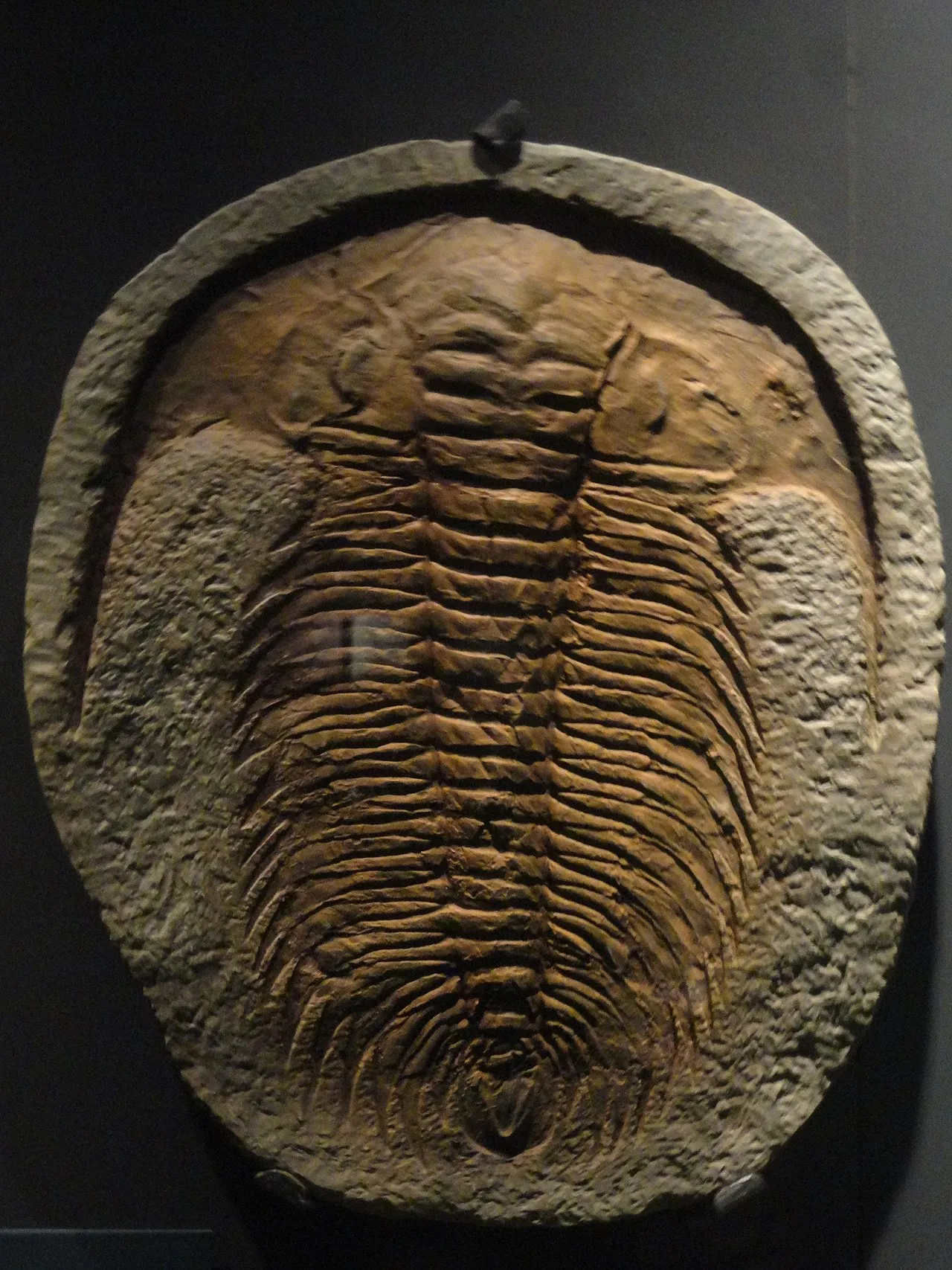
The name “trilobite” means “three lobes,” and this is the key identification feature. Every trilobite has:
- Three longitudinal lobes — a raised central lobe (the axial lobe) flanked by two flatter side lobes (pleural lobes)
- Three body sections — a head shield (cephalon), a segmented middle (thorax), and a tail plate (pygidium)
- Segmented thorax — the middle section is divided into distinct segments that allowed the animal to flex and, in many species, curl into a ball
Key Features to Look For
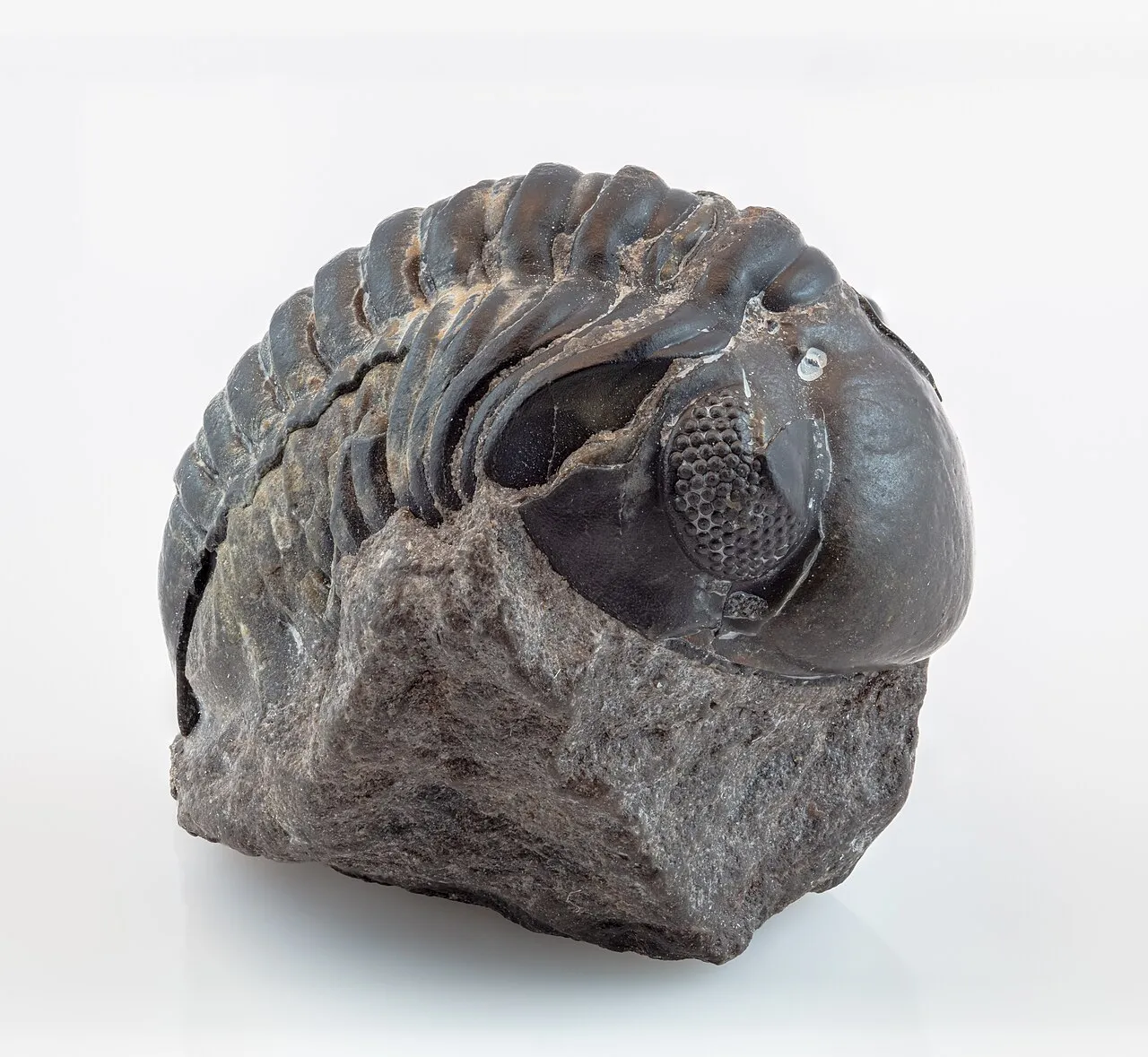
- Compound eyes — Many trilobites had sophisticated compound eyes made of calcite crystals. These appear as crescent-shaped or rounded bumps on the head shield.
- Glabella — The raised central portion of the head, often with distinctive furrows
- Genal spines — Many species have spines projecting from the back corners of the head shield
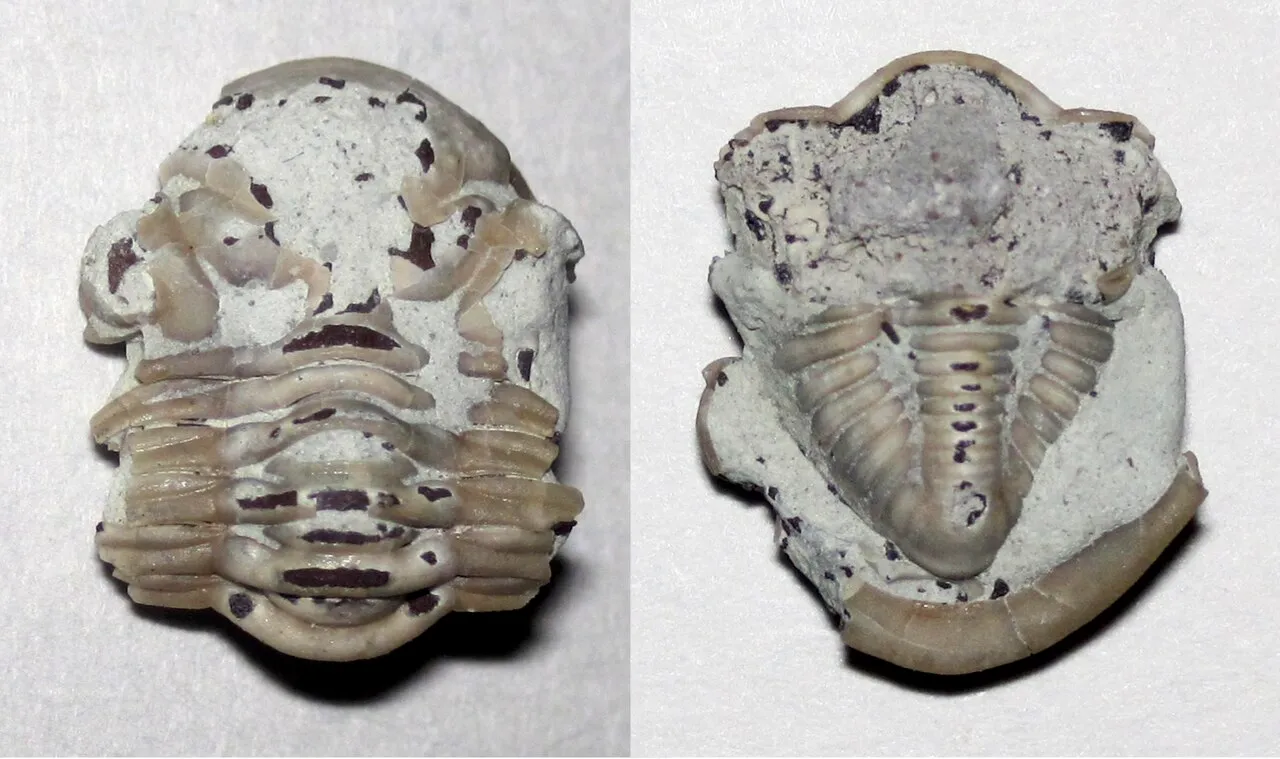
- Enrollment — Trilobites could curl up like pill bugs. Enrolled specimens are among the most prized by collectors.
Common US Species for Collectors
Flexicalymene meeki (Ohio, Indiana, Kentucky)
- Age: Upper Ordovician (~450 Ma)
- Size: 1-3 cm typical
- Where: Creek beds and road cuts in southwestern Ohio, particularly Caesar Creek
- Notes: Ohio’s unofficial fossil mascot. Often found enrolled. Brown/tan in limestone.
Isotelus maximus (Ohio, Indiana, Kentucky)
- Age: Upper Ordovician (~450 Ma)
- Size: Up to 35 cm — one of the largest trilobites
- Where: Same Ordovician formations as Flexicalymene
- Notes: Ohio’s official state fossil. Large, smooth, oval-shaped. Complete specimens are rare and valuable.
Elrathia kingii (Utah)
- Age: Middle Cambrian (~510 Ma)
- Size: 1-5 cm
- Where: Wheeler Shale, House Range, western Utah
- Notes: The most commonly collected trilobite in the US. Available at commercial dig sites (U-Dig Trilobites). Excellent for beginners.
Phacops rana (New York, Ohio, Pennsylvania)
- Age: Middle Devonian (~385 Ma)
- Size: 2-5 cm
- Where: Devonian shales and limestones of the eastern US
- Notes: Famous for its large, schizochroal (individually lensed) compound eyes. Often found enrolled.
How to Collect Trilobites
- Target the right rock — Trilobites are found in shale, limestone, and mudstone. Know which formation you’re working in.
- Split along bedding planes — Use a chisel to open rock along natural layers. Trilobites often sit right on these surfaces.
- Look for cross-sections — Partially exposed trilobites appear as dark, segmented lines in rock faces.
- Check weathered surfaces — Rain and frost free trilobites from softer rock. Surface scanning can be very productive.
- Collect the negative too — When you split a rock and find a trilobite, keep both halves. The mold (negative impression) can be just as informative.
Preservation and Display
- Handle with care — trilobite exoskeletons can be fragile
- Clean gently with a soft brush and water
- For matrix reduction (removing surrounding rock), use a pin vise or air scribe
- Display in Riker cases or on small stands
- Label with species (if known), location, formation, and date collected
Reference Photos
Commonly Confused With
- Horseshoe crabs (similar shape but modern)
- Isopods (similar segmentation but much smaller)
- Concretions (rounded rocks mistaken for enrolled trilobites)